Description
THE WOAD INDIGO IS BACK ! THE FAMOUS EUROPEAN BLUE GOLD
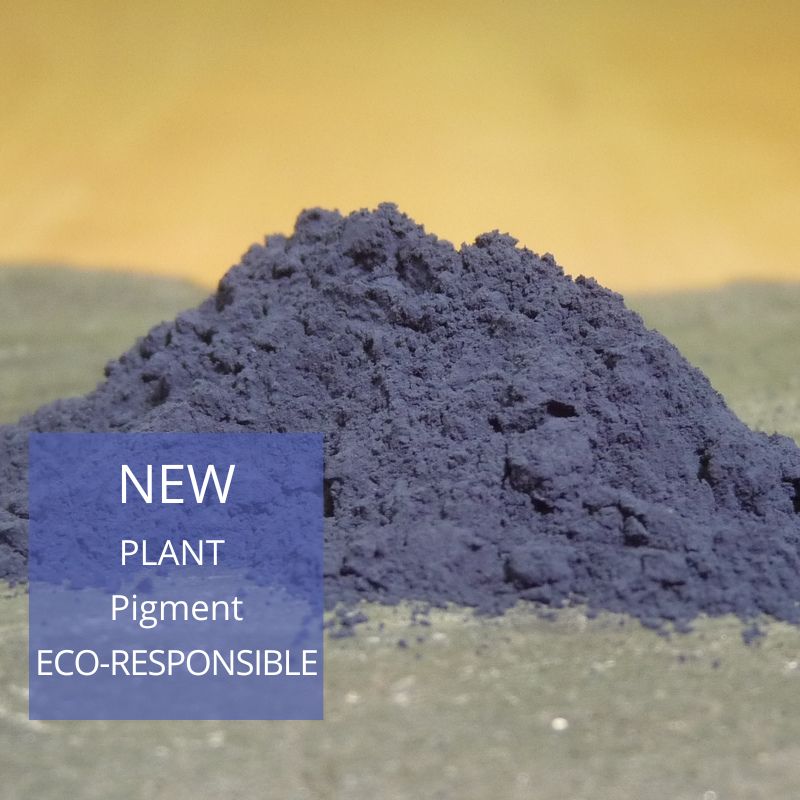
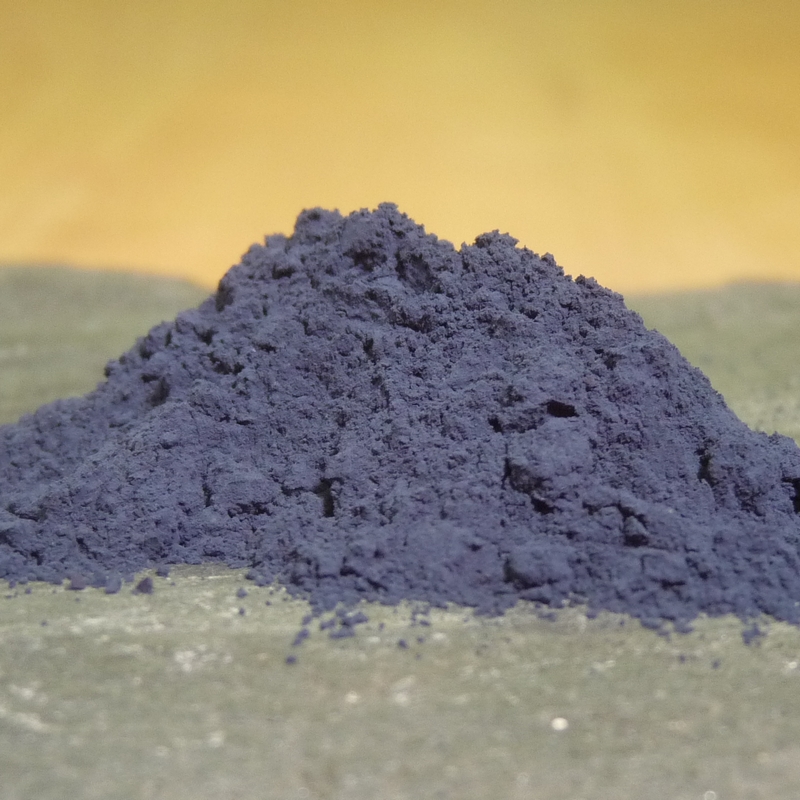
A plant-based pigment prepared from fresh leaves of woad (Isatis tinctoria L.). This natural indigo in powder form, manufactured in France, is the result of the innovative, industrial, eco-responsible, and from agricultural cooperation projet of the company BLUE & PASTEL. We are glad to offer you this valuable pigment as part of our partnership BLUE & PASTEL x GREEN’ING.
The main dye component is indigotin +/- indirubin
Uses :
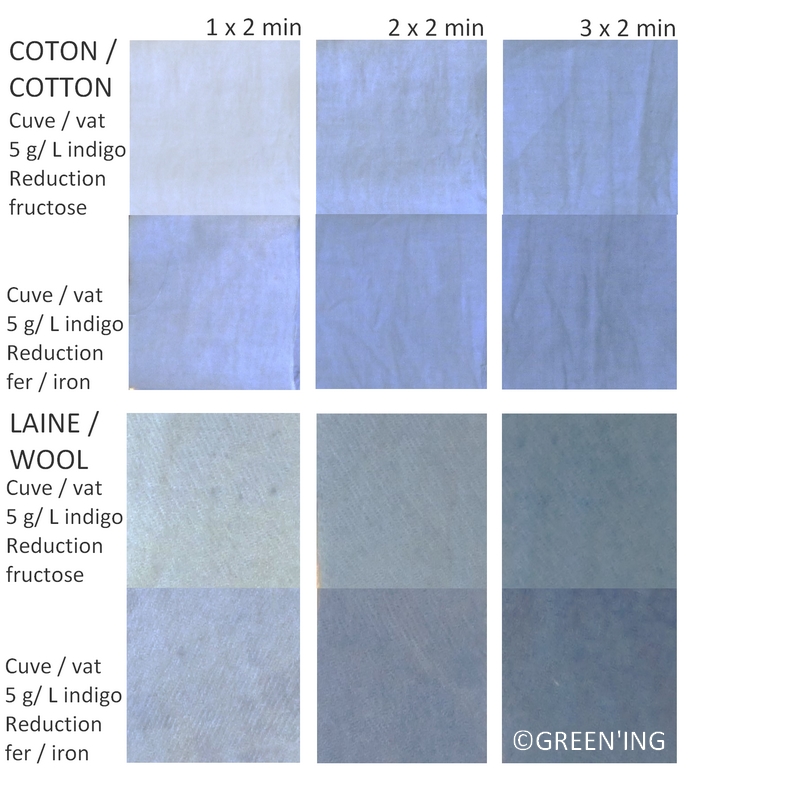
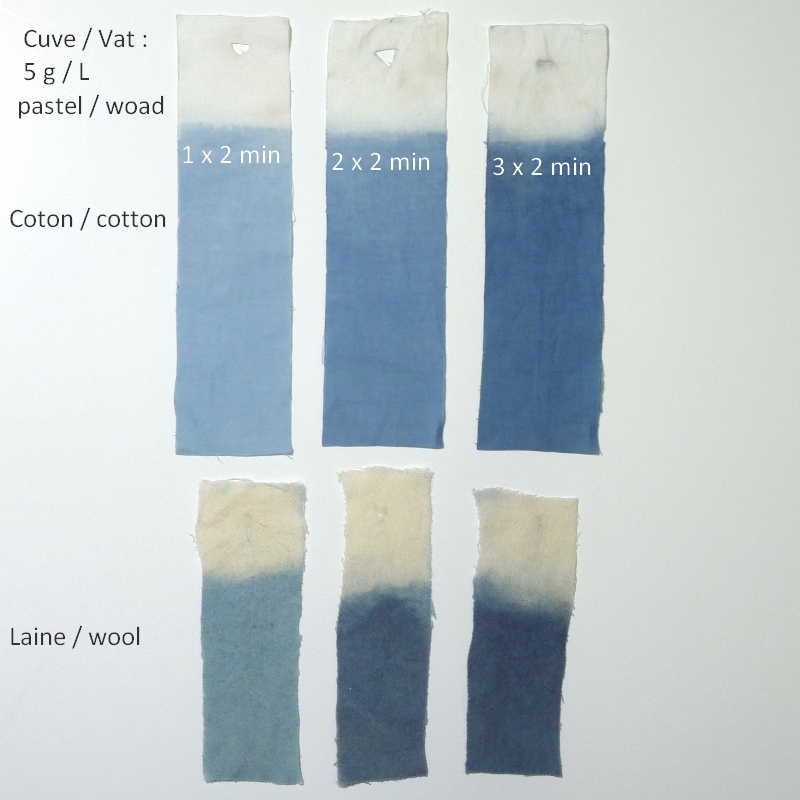
Textile dyeing : the natural indigo dye provides ranges of blue shades, from very clear to dark, with a very good lightfastness and washfastness. Its use in textile needs to turn it from an oxidized state (blue pigment, insoluble) to a reduced state (greenish yellow pigment, soluble) which will allow to fix on fibers before being again oxidized (by the oxygen of air – a magic step that develops the blue color). These reactions can be processed in natural vats by using our fructose syrup and hydrated lime for instance (1-2-3 vat type).
Instructions and downloads : Preparation of indigo vats & dyeing instructions, advanced information on indigo natural vats (only in French, sorry).
The indigo can be easily combined with other dye extracts (yellow, red for example) to widen the pallet of shades (green, purple…).
Woad indigo is one of the main dyes used, as plain, ground or overdyeing, for numerous historical shades as described in the books Paul Gout’s 157 colours or those of Antoine Janot’s 85 colours.
Paintings, decoration, fine arts : the indigo is then directly used as a natural pigment, after homogenizing into the selected binder or medium. It may be necessary to grind the pigment into the medium in order to develop the colour and avoid big particles.
Other uses : cabinetmaking, ink.
This product is not intended for food.
The plant :
Woad (Isatis tinctoria L.) is a biennial herbaceous plant.
In its first year, it grows as a rosette of medium green, oblong, generally hairless, alternately arranged leaves. The fresh leaves of this first year are used to produce indigo in powder or paste form, or to prepare compost products (agranats and cocagnes).
During the second year, grows a stem 1 to 1.5 meters tall, bearing beautiful yellow flowers that will later provide seeds, that can be used to produce an oil of interest for cosmetics.
A plant in the history of humanity and industrial know-how :
Woad has accompanied the history of men, as a source of blue dye and for medicinal uses. For many years, the use of this plant was recognized as dating back to the Neolithic period (2200 to 6000 years ago), but a research from 2025 has demonstrated traces of the plant and its indigo on stone tools dating back approximately of 34,000 years (Paleolithic), collected in Georgia, probably the origin area of this plant. Woad has been intensely used as a coloring agent fore more than five centuries – from the Middle Ages to the 19th century – but its use as a pigment only appears at the end of this period. This long history is marked by various developments concerning the raw material, the processes of transformation and use, as well as the form of the dyes themselves. It has often been related to economic stakes and did contribute to the prosperity of some French regions, particularly in Occitanie (the ‘Pays of cocagnes), Picardy, as well as in United kingdom and Italy. This story continues today, establishing woad as a source of natural and renewable ingredients, agricultural diversification, and a circular economy… and we will be glad that you can contribute to this history!
 Go back to Natural Extracts & Natural Dyes