Description
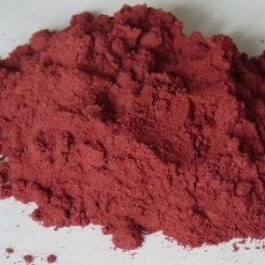
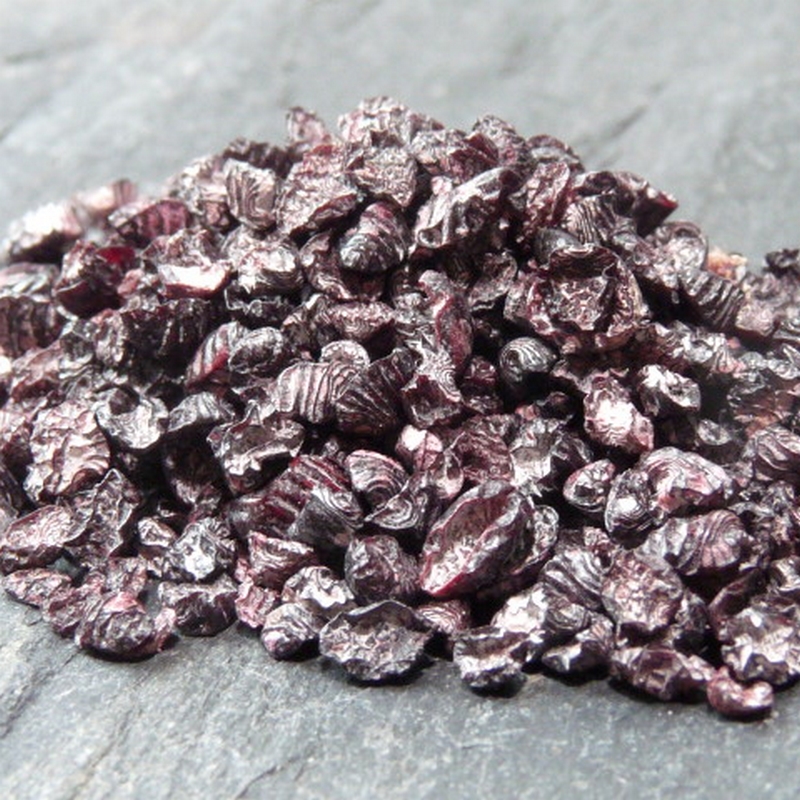
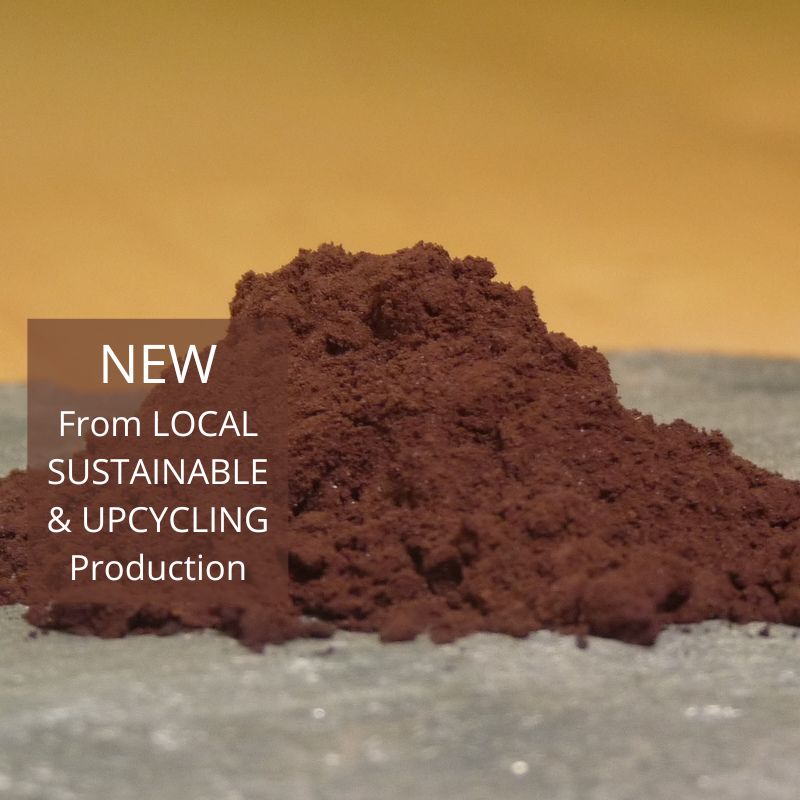
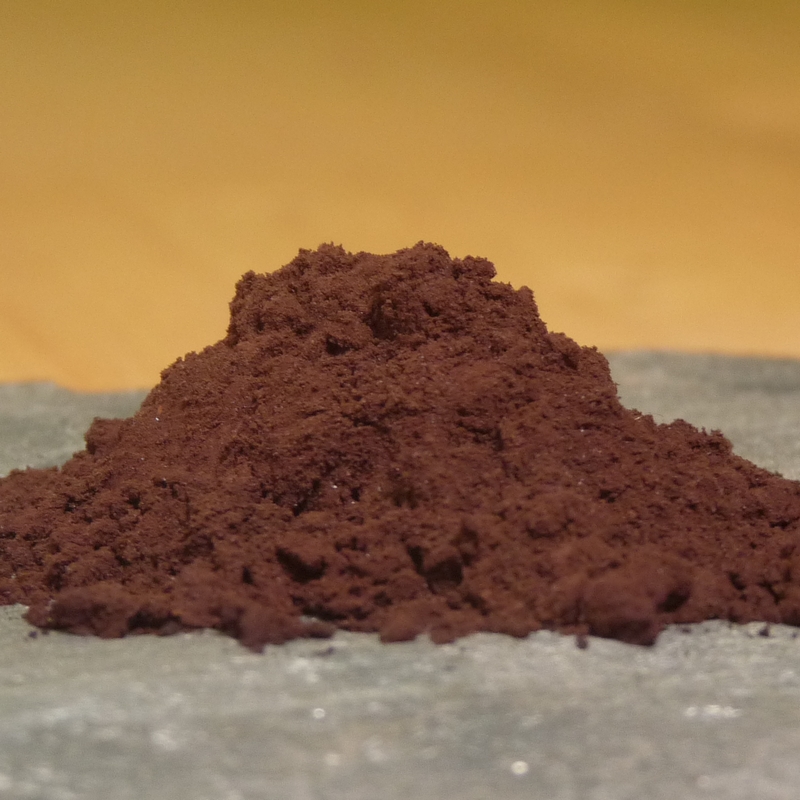
This WALNUT HUSK EXTRACT was developped and manufactured by GREEN’ING from walnut (Juglans regia L.) husks collected in orchards.
100 % plant dye.
Main components : Juglone (naphtoquinone), gallotannins and flavonoids (quercetin derivatives).
NB : In many countries, it is almost impossible to find the preparation called “walnut stain” from plant. In many cases, this product is from cassel earth, a mineral. Our walnut husk extract is guaranted 100% from plant origin.
Uses :
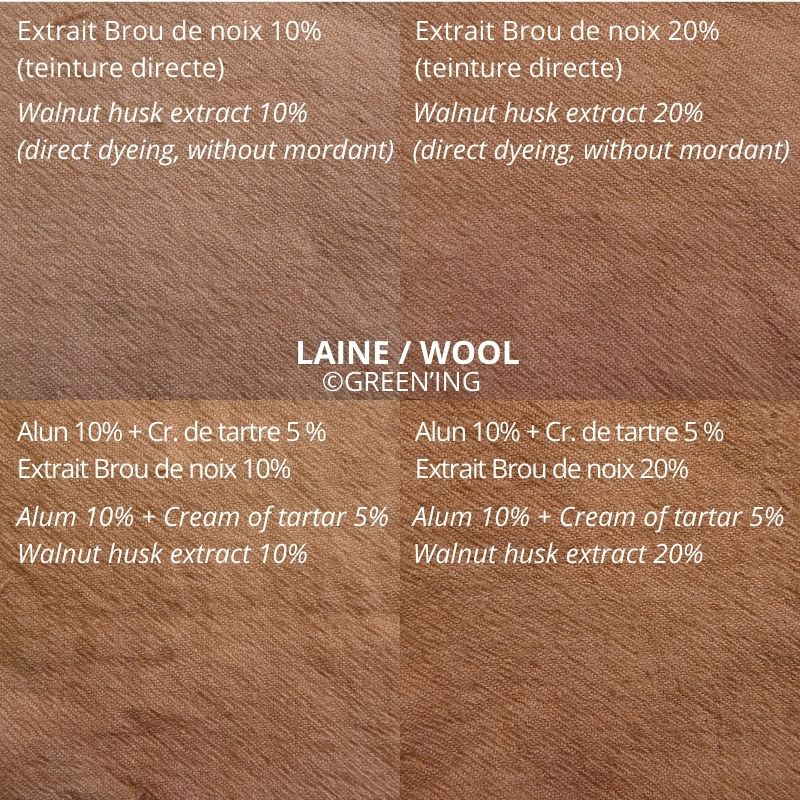
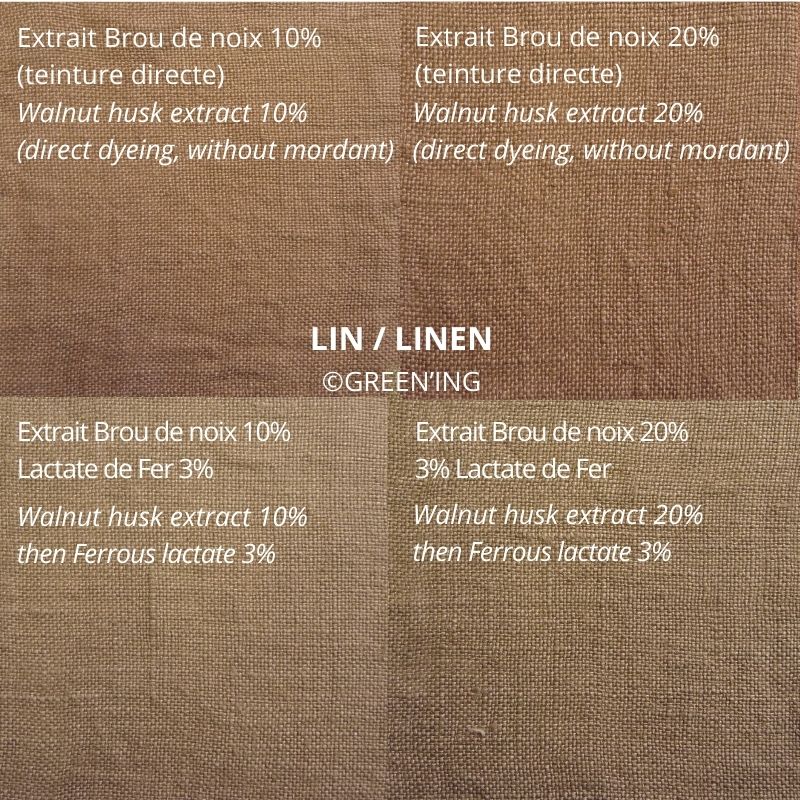
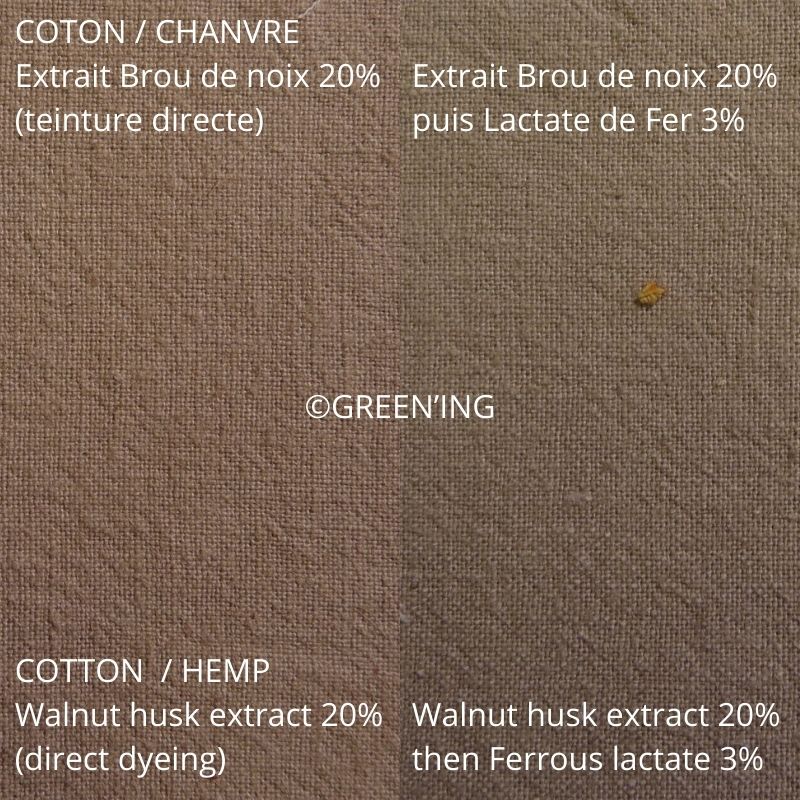
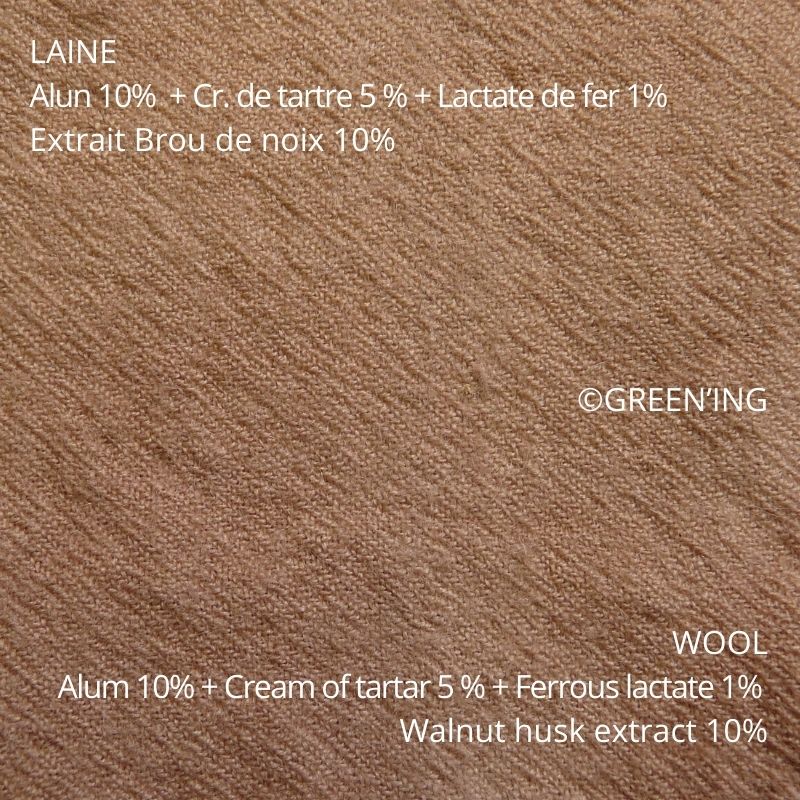
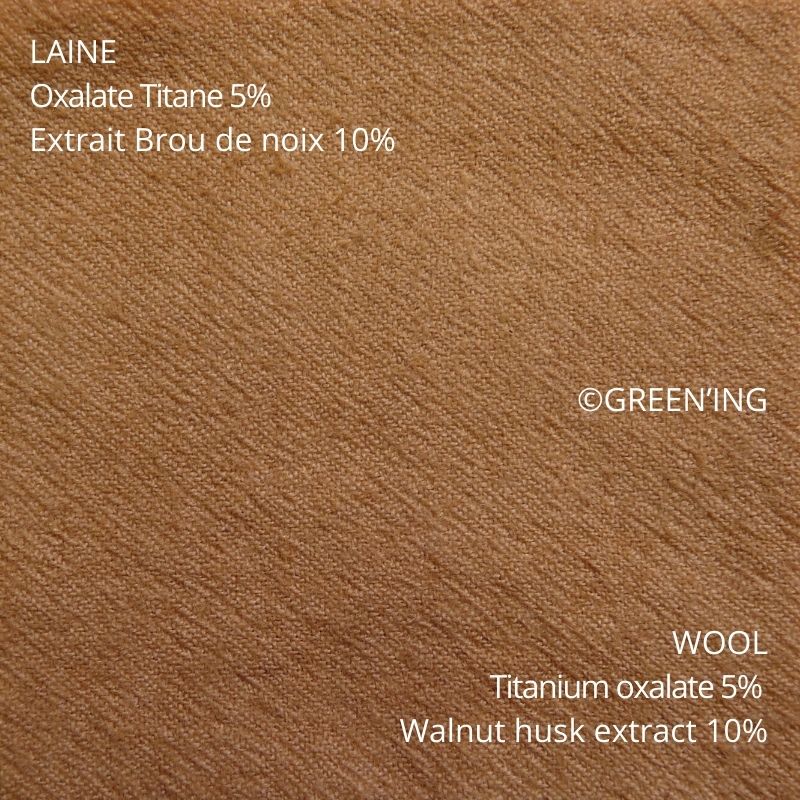
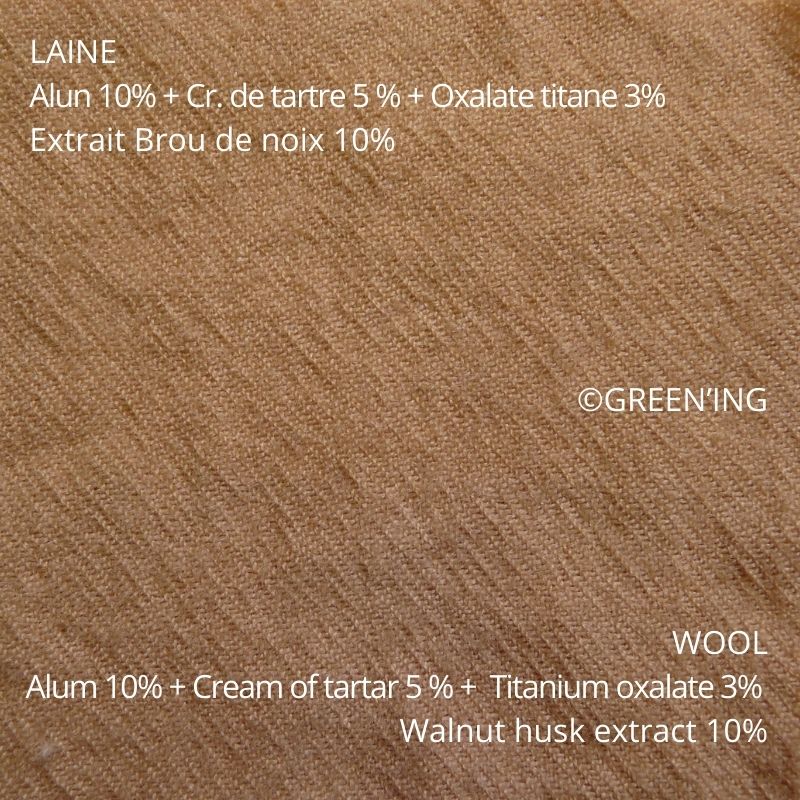
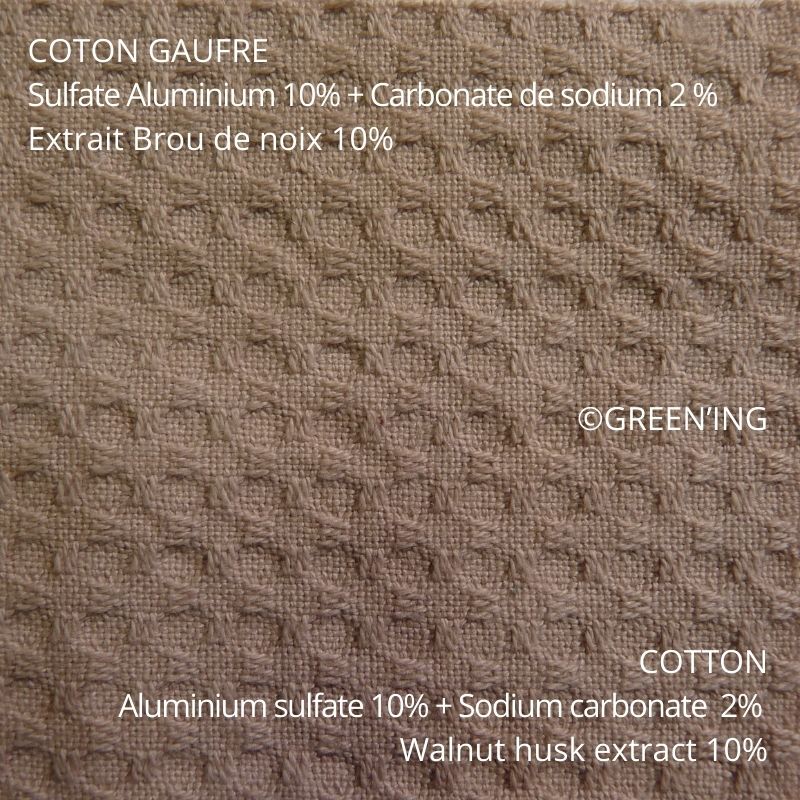
Natural dyeing and printing : This extract can be used at 5 – 25% WOF, depending on the depth of shade. It can be used without any mordant, especially on wool and silk. Combination with a mordant will provide more intense shades. It can be used with any kind of fiber to provide a large range of colours (from beige to fawn brown).
Historically, walnut stain has been used since the Middle Ages to create many flesh tones (faces, hands, etc.) in old wool tapestries. Used as an overdye or mixed with other natural dyes, walnut stain was also used to turn down bright colors and tone down hues. Its excellent lightfastness led Colbert to classify it as a “fast dye.”.
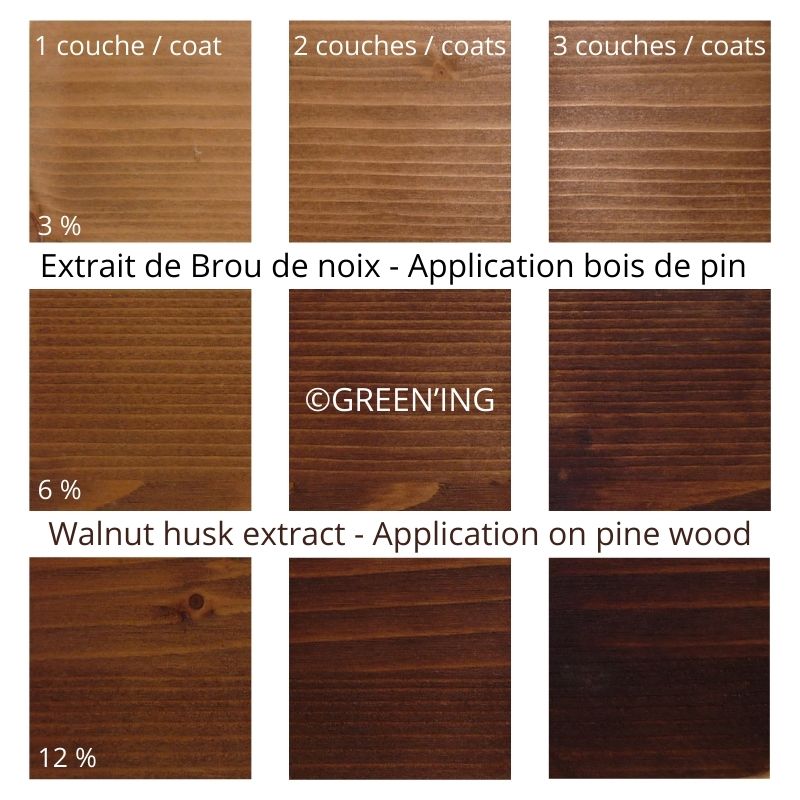
Woodworking and coloring : Walnut stain is a very popular wood stain among cabinetmakers, carpenters, and DIY enthusiasts. It can be applied to all types of wood and allows for varying shades of lightness depending on the number of coats applied. Prepare a solution at 3-12%, for instance. Apply with a brush, a cotton wick or a cloth. After staining, the wood can be waxed, varnished, or coated with linseed oil.
The plant :
The common walnut, Juglans regia L., is native from mountain areas in Asia. Since antiquity, it has spread West, first to the current region of Iran and Turkey, then throughout the Mediterranean region, and finally to Western Europe.
Walnut husks, as well as walnut bark and roots, were basic ingredients of large-scale dyeing processes developed in Europe since the Middle Age, not only for drapery but also for tapestry production. These dyes were also used to lower the brightness of colors (darken them) without changing their tone.
Other walnut species (i.e. black walnut) were used by Native Americans in Northern America and Canada for dyeing shirts, embroidery, and weaving. Later, they were extensively used during the American Civil War for dyeing Confederate army uniforms.